

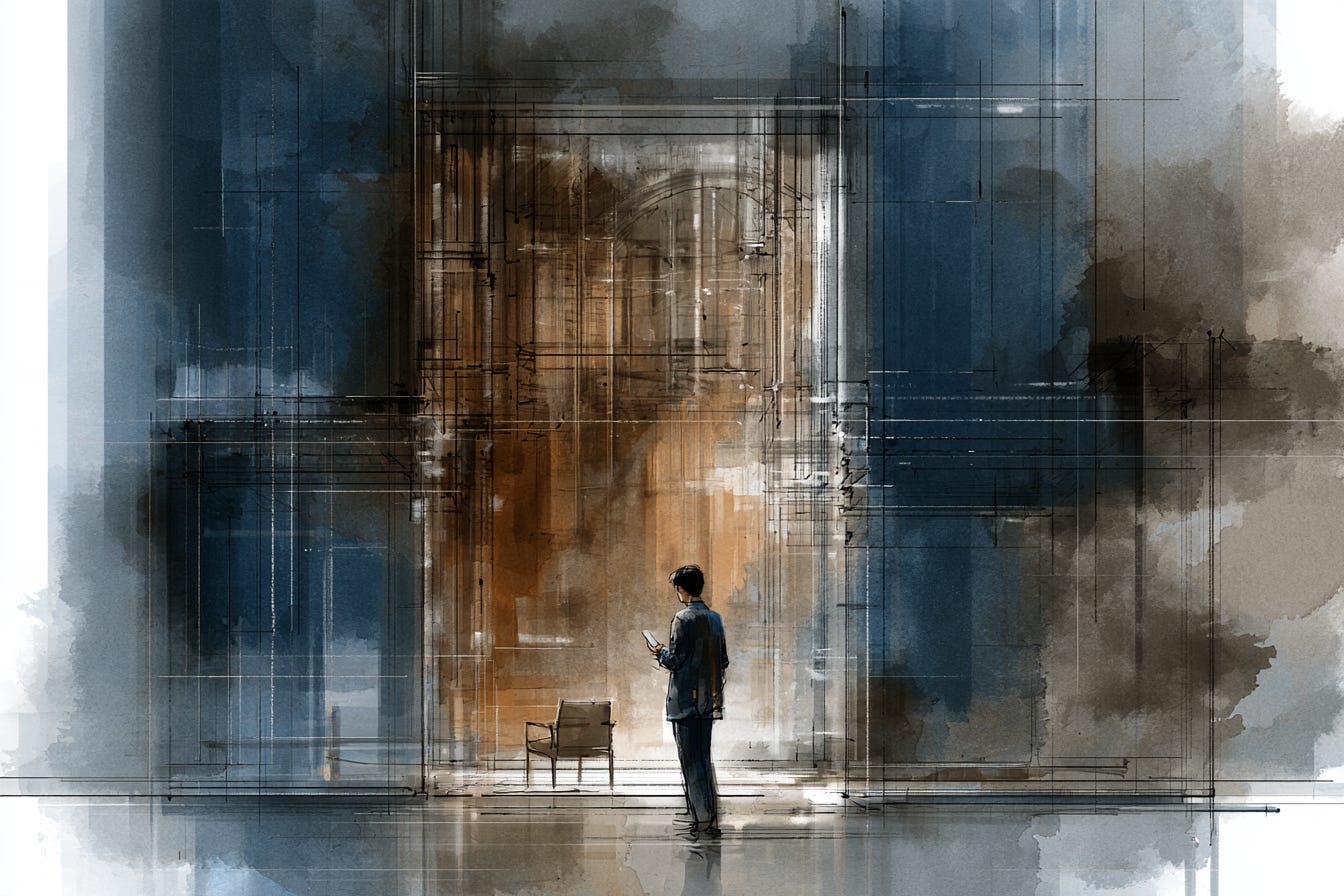
Riley is seventeen and good with words. They can hold a group chat of forty people, write a caption that gets passed round the school, and settle an argument between two friends in three careful messages. Put Riley in a room with one of those friends, upset and waiting for them to say something, and they go quiet.
They have never had to do this before, and nobody has shown them how.
I have made Riley up. The survey that follows I have not.
Six million quiet weeks
In May 2026 the charity Mental Health UK published a survey, carried out by Research Without Barriers at the end of April, under the title “Britain’s gone quiet”. Fourteen per cent of the people asked said they had gone more than a week without speaking to a friend or loved one on the phone. The charity scales that to more than 6.4 million people. Just over half of everyone asked, 51%, said making or taking a call makes them anxious to some degree.
The survey was run in partnership with iD Mobile, a phone network, and a phone network has an obvious interest in people calling each other more. The charity’s write-up does not give the sample size either. I would read the headline figures with both in mind. The finding I find harder to set aside is the split by age.
Sixty-nine per cent of Gen Z said phone calls make them anxious or worried. Among people aged 55 and over, the figure was 32%. That is a 37-point gap between a generation that grew up dialling a number without thinking about it and one that grew up composing a message, reading it back, and deciding whether it was safe to send.
The want is still there
The easy explanation is that the platforms made people not want each other. The same survey says something more specific. Seventy-five per cent reported a lift in mood after speaking to someone they love on the phone. Seventy-two per cent agreed that hearing someone’s voice makes a bigger difference than reading their words. Fifty-seven per cent said they had sent a text when a phone call would have been far more appropriate.
The want is still there. What is missing is the practice.
The people surveyed send, on average, up to 25 text-based messages a day, and 73% admitted to rewriting a message several times, hunting for a version that reads the way they mean it. That is a skill: knowing how to edit yourself into a version people respond well to.
It also rewards something a live conversation does not allow. You can’t redraft a phone call. You can’t take back a pause that went on a beat too long, or a sentence that came out wrong the first time. Text lets you find the right words before anyone hears the wrong ones. Conversation asks you to say the wrong ones out loud sometimes, and survive it.
What performance trained out
Nobody set out to do this. The platforms that carried a generation’s social life into adulthood were built to reward the edited version of a person, the reply you can redraft until it is right, because that kept people posting and replying and coming back. Conversation, unrehearsed and unedited, was never something those systems needed from anyone. So the muscle for it had less reason to form than it did in the people who grew up before texting existed.
The skill that did not form is no smaller than the one that did. It may be the harder of the two. Reading tone as it happens, sitting inside a silence without filling it, saying the imperfect thing and letting it stand: none of that can be practised by rewriting a message until it is right.
Where the practice used to happen
I wrote recently about a stranger in a DIY shop queue who turned round to ask me about a car, and the person on the till who joined in. Which Car Is That? That piece was about the places where unplanned conversation happens, and how they are removed without anyone deciding to remove them. This is the other half of it. A conversation like that needs somewhere to happen, and it also needs people willing to say something unedited to a stranger.
The two feed each other. The queue, and the phone call you had to make because there was no other way to book the appointment, were where the practice was done, a minute at a time, with nothing much at stake. I cannot show from a survey that fewer of those minutes produces more anxious callers. I would be surprised if it did not.
Follow Riley forward ten years. They are good at their job. The difficult conversation with a colleague goes into a message, composed and recomposed. The feedback that needed saying arrives as an email, and arrives slightly wrong.
There is a working life, and a family, and a whole set of relationships being built on people who are eloquent on the page and out of practice in the room. The seventeen-year-olds coming up behind Riley will have had fewer tills to practise at.
Authors note
Riley is a fictional character. Their story is drawn from a combination of professional observation and personal proximity to real events. The experiences described are real. The person is not.
You’re reading The Next Evolution by Neil Catton, articles that explore the human world and the intersection of technology, they try and ask difficult questions - not to scare - but to inform. If someone forwarded this to you, you can subscribe free at neilcatton.substack.com.
Neil Catton is the author of The Next Evolution, The Cognitive Crucible and The Shadow System - available on Amazon, and writes at the intersection of technology, ethics, and human purpose.