

A small town in northern India has solar panels, enough of them to generate more power than the community uses on a summer afternoon. What it does not have is a way to store that power so it can be used in the evening, when the panels are dark and demand is highest. Until 2025, the economics of battery storage made this unaffordable. The batteries that could do the job are made from lithium, which is mined primarily in South America and Australia, refined in China, and priced at a level that makes grid-scale storage out of reach for communities that are not already well-capitalised.
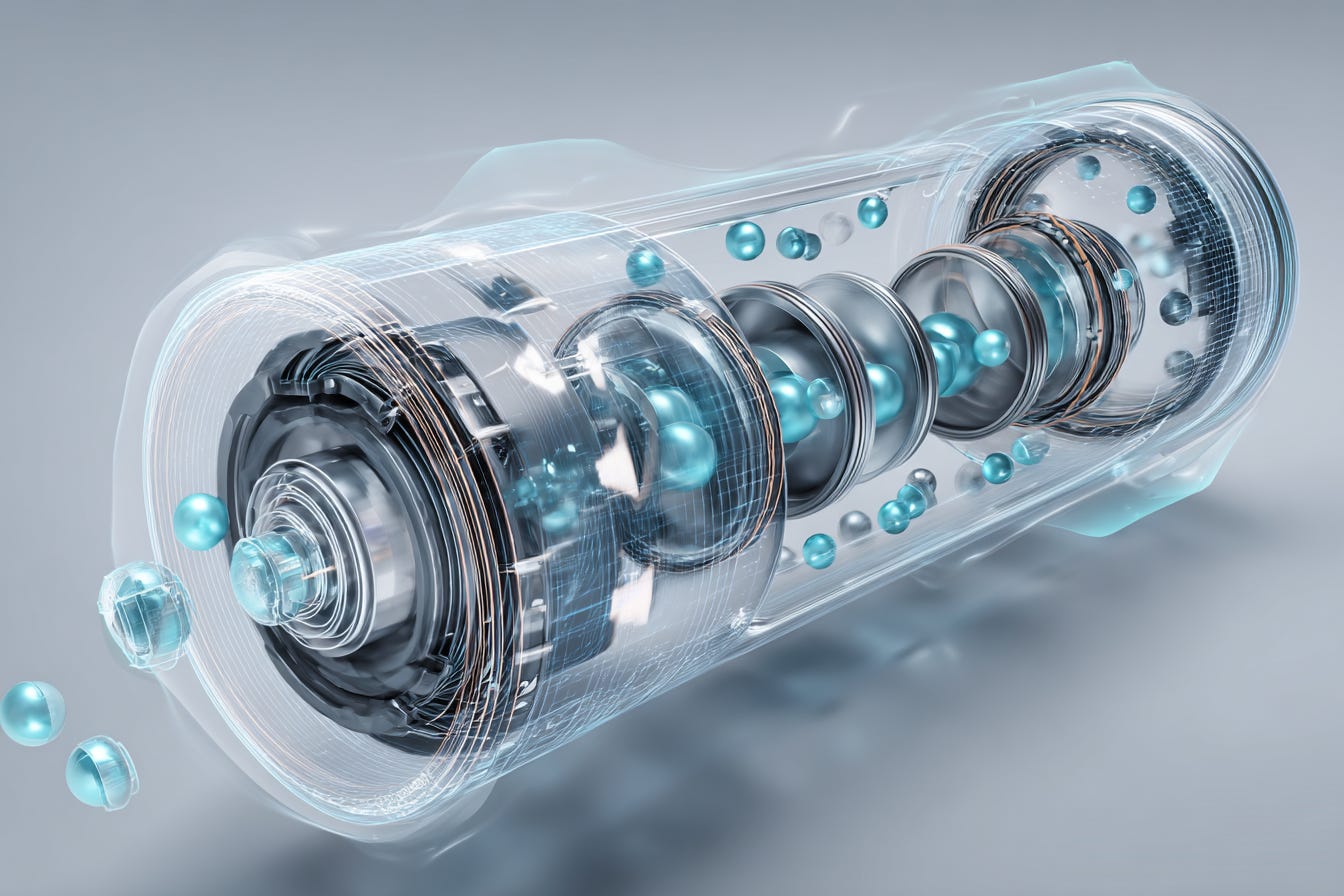
In a factory in Fujian province, China, a different kind of battery is now in production. CATL — the world’s largest battery manufacturer, holding 39.2% of the global electric vehicle battery market in 2025 — launched its Naxtra sodium-ion brand in April 2025 and confirmed large-scale deployment across passenger vehicles, commercial vehicles and grid storage for 2026. The chemistry is different from lithium-ion. The cathode uses sodium iron hexacyanoferrate, a form of Prussian white — a material based on iron, carbon and nitrogen rather than the lithium, cobalt and nickel that dominate conventional batteries. The electrolyte carries sodium ions rather than lithium ions. The operation is the same: charge the battery, ions move in one direction; discharge it, they move back. The material doing the moving is what changes.
Sodium is not a rare element. It makes up roughly 2.4% of the Earth’s crust by mass — about 23,600 parts per million, against 20 parts per million for lithium. IRENA puts the ratio at around 1,000 times more abundant. It is found on every continent, in seawater, in salt deposits, in rock formations, distributed across the world with none of the geographic concentration that makes lithium a geopolitical instrument. A battery built from sodium is, in principle, a battery that any country with access to basic industrial chemistry can manufacture domestically. Whether that principle translates into practice — into affordable energy storage for the communities that most need it — is the story of sodium-ion batteries in 2026.
The case for sodium, and its honest limits
Sodium-ion batteries work through the same basic electrochemical principles as lithium-ion. Ions shuttle between cathode and anode through an electrolyte, storing energy on the way in and releasing it on the way out. The physics is essentially identical. Sodium ions are larger than lithium ions. They require electrode materials with different crystal structures to accommodate them. But the engineering challenge is not different in kind, only in the specific materials required.
The practical advantages over lithium-ion are concrete. The first is cold-weather performance. Lithium-ion batteries can lose 30 to 40% of their effective capacity at minus 20 degrees Celsius. CATL’s Naxtra sodium-ion cells retain around 90% of their power at minus 40 degrees Celsius and operate across the full range from minus 40 to plus 70 degrees Celsius. For communities in cold climates — northern India in winter, Siberia, the Canadian prairies, Nordic countries — this is not a marginal improvement. It is the difference between a battery that works and one that does not.
The second is safety. Sodium-ion batteries have a lower risk of thermal runaway, the chain reaction that causes lithium-ion batteries to catch fire, because they can be transported and stored at zero charge state without degradation, which lithium-ion batteries cannot safely do. They are also less susceptible to the internal short circuits that arise from lithium dendrite formation during rapid charging. These safety properties matter for stationary grid storage, where fire risk is a serious operational and regulatory concern.
Sodium is around 1,000 times more abundant than lithium in the Earth’s crust. It is found on every continent. A battery built from sodium is, in principle, a battery that any country with basic industrial chemistry can manufacture domestically. Whether that principle translates into practice is the question.
The third advantage is the raw material geography. Lithium reserves are concentrated primarily in Australia, Chile and Argentina — the so-called lithium triangle. Cobalt, used in many high-energy-density lithium-ion chemistries, comes overwhelmingly from the Democratic Republic of Congo, with around 72% of global mine output and serious concerns about the conditions under which it is extracted. Graphite, used in lithium-ion anodes, is refined predominantly in China, which also processes most of the world’s cobalt. Sodium-ion cathode materials based on iron compounds and sodium have no comparable concentration. The supply chain vulnerability that runs through every lithium-ion battery manufactured today does not, in principle, run through a sodium-ion equivalent.
The limitations are real and significant. Energy density is lower: lithium-ion cells at the high end reach 300 Wh/kg or more; CATL’s Naxtra achieves 175 Wh/kg, comparable to lithium iron phosphate batteries but below the high-nickel chemistries used in premium electric vehicles. For a passenger car where range and weight compete directly, this gap matters. For a city runabout, a two-wheeler, a commercial van, or a stationary grid storage installation where weight is not the primary constraint, it does not. The applications best suited to sodium-ion are those where cost, safety, cold-weather performance and supply chain resilience matter more than maximum energy density per kilogram.
The other complication is the lithium price cycle. Lithium carbonate prices spiked dramatically in 2022 as EV demand surged, making sodium-ion’s cost advantage appear decisive. Since then, lithium prices have fallen more than 70%, narrowing the gap significantly. IRENA’s November 2025 technology brief projects that sodium-ion cell costs could fall to around $40 per kilowatt-hour at scale, against LFP lithium-ion at roughly $70 per kilowatt-hour in 2025. That cost gap, if it materialises in commercial production, is real. But it is not yet demonstrated at scale, and if lithium prices remain low or fall further, the economic case for sodium-ion rests more on supply chain resilience and specific performance characteristics than on direct cost comparison.
Who is building it, and who is not
China controls around 96% of current global sodium-ion production capacity. This is not an accident of geography — it is a consequence of the same industrial policy and manufacturing scale that gave China dominance in lithium-ion. CATL launched the Naxtra brand in April 2025 and confirmed large-scale deployment for 2026. BYD broke ground on a 30 GWh sodium-ion facility in Xuzhou, Jiangsu, with a third-generation platform reportedly capable of up to 10,000 cycles. Global announced production capacity across sodium-ion projects had reached around 370 GWh by early 2026, with over $20 billion in committed investment more than 90% of it in China.
Sodium-ion batteries — state of the market in 2026
CATL Naxtra: 175 Wh/kg energy density; ~400 km range (Changan Nevo A06 sedan, CLTC); -40°C to +70°C operating range
CATL Naxtra: First sodium-ion battery to pass China’s EV safety standard GB 38031-2025
BYD: Third-generation platform; up to 10,000 cycles; 30 GWh facility under construction in Xuzhou, Jiangsu
Global shipments 2025: ~9 GWh — up roughly 150% year on year (industry estimate)
Global announced capacity: ~370 GWh cells; 300+ GWh cathodes; >$20 billion committed investment
China production share: ~96% of current and near-term capacity
Cold-weather: ~90% capacity retention at -40°C (vs ~30–40% capacity loss for standard lithium-ion at -20°C)
IRENA projected cost: ~$40/kWh at scale; LFP lithium-ion reached ~$70/kWh in 2025
Honest complication: Lithium prices fell >70% since 2022, narrowing sodium’s cost advantage
Key applications: Stationary grid storage (the dominant near-term segment), entry EVs, cold-climate
MIT Technology Review: Named sodium-ion batteries the #1 Breakthrough Technology of 2026
Players: CATL (Naxtra), BYD, HiNa, Faradion (acquired by Reliance New Energy, 2022–2024), Peak Energy (US)
For countries outside China, the picture is more complicated. Faradion, the British sodium-ion company that was among the pioneers of the chemistry, was acquired by Reliance New Energy in stages from 2022 — initial majority stake at an enterprise value of around £100 million plus £25 million in growth capital, with full 100% acquisition completed in October 2024. The technology now sits in the Indian conglomerate’s energy portfolio rather than in a domestic European supply chain. Germany’s Federal Ministry of Education and Research committed €14 million to the SIB:DE FORSCHUNG programme in February 2025, a 21-partner consortium coordinated by BASF to industrialise sodium-ion technology. Peak Energy in the United States is deploying sodium-ion grid storage at substations and industrial sites. These are real commitments, but at different scales from China’s industrial bet. The pattern is familiar from the lithium-ion story: China invested early, moved fast, and built manufacturing scale that competitors are now trying to match from a standing start.
The question this raises is whether sodium-ion batteries will replicate the lithium-ion geopolitical structure in a different material, or whether the abundant and distributed nature of sodium changes who can participate in the supply chain. The encouraging sign is that sodium-ion cathode materials based on Prussian white and layered oxide compounds do not require the same refined critical minerals as lithium-ion cathodes; the dependence on cobalt refining capacity concentrated in China is absent. A country with basic industrial chemical manufacturing capacity and a sodium source — which describes most of the world — can in principle build sodium-ion cells domestically. Whether the technology transfer and investment happen before China locks in the same kind of manufacturing dominance it achieved in lithium-ion is the race that the next five years will decide.
What cheaper, more abundant storage changes
The most direct consequence of viable sodium-ion grid storage is for communities like the small village in India, places with renewable generation capacity and no affordable way to store it. Stationary energy storage is the dominant near-term application for sodium-ion, with industry estimates putting it at roughly three-quarters of current deployment, and this proportion reflects where the technology’s cost and performance characteristics are most immediately compelling. A grid storage installation does not care about weight. It cares about cost per kilowatt-hour, cycle life, safety and operating temperature range. Sodium-ion is competitive on all four. IRENA suggests that at projected costs of $40 per kilowatt-hour, sodium-ion grid storage becomes economically viable for small-scale community storage in settings where it was not before.
The two- and three-wheeler electric vehicle market is the other near-term application with direct access implications. In India, Indonesia, Vietnam and across South and Southeast Asia, electric two- and three-wheelers are the primary personal transport technology for hundreds of millions of people. The batteries in these vehicles are typically small, the range requirements are modest, and the total cost of ownership is the overriding purchase criterion. A sodium-ion battery pack that is meaningfully cheaper than its lithium-ion equivalent, safer to operate in high ambient temperatures, and not dependent on a supply chain that must pass through constrained lithium processing capacity, is precisely the product these markets need. HiNa Battery, the Chinese sodium-ion specialist, is already deploying in low-speed EV and electric two-wheeler markets. CATL’s Naxtra is targeted explicitly at affordable entry-level vehicles.
Lithium is 20 parts per million in the Earth’s crust. Sodium is around 23,600. The geography of a battery built from sodium is the geography of seawater, rock salt and common industrial chemistry. Whether the manufacturing of that battery is geographically distributed is a different question entirely.
The grid storage consequence for renewable energy integration is the larger systemic argument. Solar and wind are now the cheapest sources of new electricity generation in most of the world, but they generate power when the sun shines and the wind blows rather than when demand is highest. Affordable grid-scale storage is the component that allows renewable generation to displace fossil fuels in the baseload role. Every additional gigawatt-hour of affordable storage installed moves that substitution further along. Sodium-ion batteries do not solve this problem alone — long-duration storage at grid scale requires other technologies — but they address the four-to-eight-hour storage window that is the most commercially immediate requirement.
There is also a strategic security argument that runs alongside the energy access argument. The dependence of the current clean energy transition on lithium, cobalt, nickel and graphite supply chains concentrated in a small number of countries, with processing and manufacturing concentrated in China, is a geopolitical risk that the US Inflation Reduction Act, the EU Battery Directive and equivalent policies in India and Japan are all partly designed to reduce. A battery chemistry whose core materials are distributed globally, and whose cathode compounds do not require refined critical minerals, addresses that dependency at the source rather than by relocating it.
What the abundant material cannot guarantee
The test for sodium-ion batteries is not whether the technology works — it does — but whether the economics reach the small town, and the thousands of places like it that have renewable generation and no affordable way to store it. The CATL Naxtra is in passenger cars, commercial vehicles and grid storage in 2026. At IRENA’s projected cost of $40 per kilowatt-hour, the answer to that access question becomes different from the answer at $70 per kilowatt-hour. The question is when, not whether.
The cold-weather performance genuinely expands where electric vehicles and grid storage are viable: Finland’s electric bus fleet and northern India’s community storage system are real use cases that lithium-ion serves poorly. The supply chain geography expands who can build battery manufacturing capacity domestically. But the core function, storing electricity, is identical to what lithium-ion already does. The difference is in the access, not in a new capability.
The most important question for the energy transition’s long-term equity is whether sodium-ion batteries enable countries with no lithium reserves and no existing position in the battery supply chain to participate in manufacturing the storage component of their own energy systems. If production concentrates in China in the same way lithium-ion production has, the chemistry changes but the geopolitical structure does not. The technology makes the more equitable outcome possible. Whether it happens depends on investment decisions, industrial policy and technology transfer arrangements that are being made right now.
What the supply chain question comes down to
Salt is everywhere. The clean energy transition requires storage, and the storage currently required runs through supply chains that are among the most geopolitically concentrated in the global economy. A battery whose core material is found across every continent, whose cathode does not require cobalt or nickel, and whose manufacturing technology is accessible to any country with basic industrial chemistry, that battery addresses a structural problem in the energy transition that the technology everyone has been investing in cannot solve.
It is also not a guarantee. CATL controls 39.2% of the global EV battery market and around 96% of current sodium-ion production capacity. The abundant material is in the ground everywhere. The factory that processes it is in Fujian.
Sodium is around 1,000 times more abundant than lithium and found everywhere. The supply chain for sodium-ion cathode materials does not pass through the same chokepoints as lithium-ion. Yet China currently controls 96% of sodium-ion production capacity. Does a more abundant material guarantee a more distributed supply chain, or does industrial scale reproduce concentration regardless of the underlying geology?
Lithium prices fell more than 70% between 2022 and 2025, narrowing sodium-ion’s cost advantage at precisely the moment it was supposed to become decisive. What does that price history suggest about whether sodium-ion’s commercial case rests on a durable structural advantage or on the volatility of a competing material’s price?
Grid-scale storage is the component that allows renewable generation to displace fossil fuels in the baseload role. Sodium-ion batteries are most immediately competitive in stationary storage. If sodium-ion costs reach $40 per kilowatt-hour at commercial scale, IRENA’s projection, what does that change for the economics of community-scale renewable energy storage in the places that have been priced out of lithium-ion solutions?
The town in northern India has solar panels and no affordable storage. If sodium-ion batteries reach the projected cost target and if the manufacturing capacity is distributed rather than concentrated, their situation changes. What other technologies in this series have a similar relationship to the energy transition — where the science is not the constraint, but the economics, the supply chain and the industrial policy are?
The technology can change who participates in the energy transition. Whether it does depends on decisions being made now about investment, industrial policy and who gets access to the manufacturing knowledge. Those decisions are not technical. They are political. And they are being made while the solar panels generate more power than the town can use, with nowhere to put it until evening.
If this raised something worth thinking through further, The Next Evolution at neilcatton.substack.com is where this conversation continues. My books The Next Evolution, The Cognitive Crucible and The Shadow System are available on Amazon.
You’re reading The Next Evolution by Neil Catton, articles that explore the human world and the intersection of technology, they try and ask difficult questions - not to scare - but to inform. This is part of the Emerging Science & Technology series.
If someone forwarded this to you, you can subscribe free at neilcatton.substack.com.
Neil Catton is the author of The Next Evolution, The Cognitive Crucible and The Shadow System - available on Amazon, and writes at the intersection of technology, ethics, and human purpose.