

You reach for your phone before you’ve decided to. Somewhere between waking and actually being awake, the scroll has already started, and by the time you notice, an hour of the day has gone somewhere you didn’t choose to send it.
That fog has a cause, not just a name. The attention economy isn’t a metaphor — it’s a system built to hold you longer than you meant to stay, and the fatigue, the fractured focus, the thinning stretch of face-to-face time are its actual output, not a side effect you can shrug off.
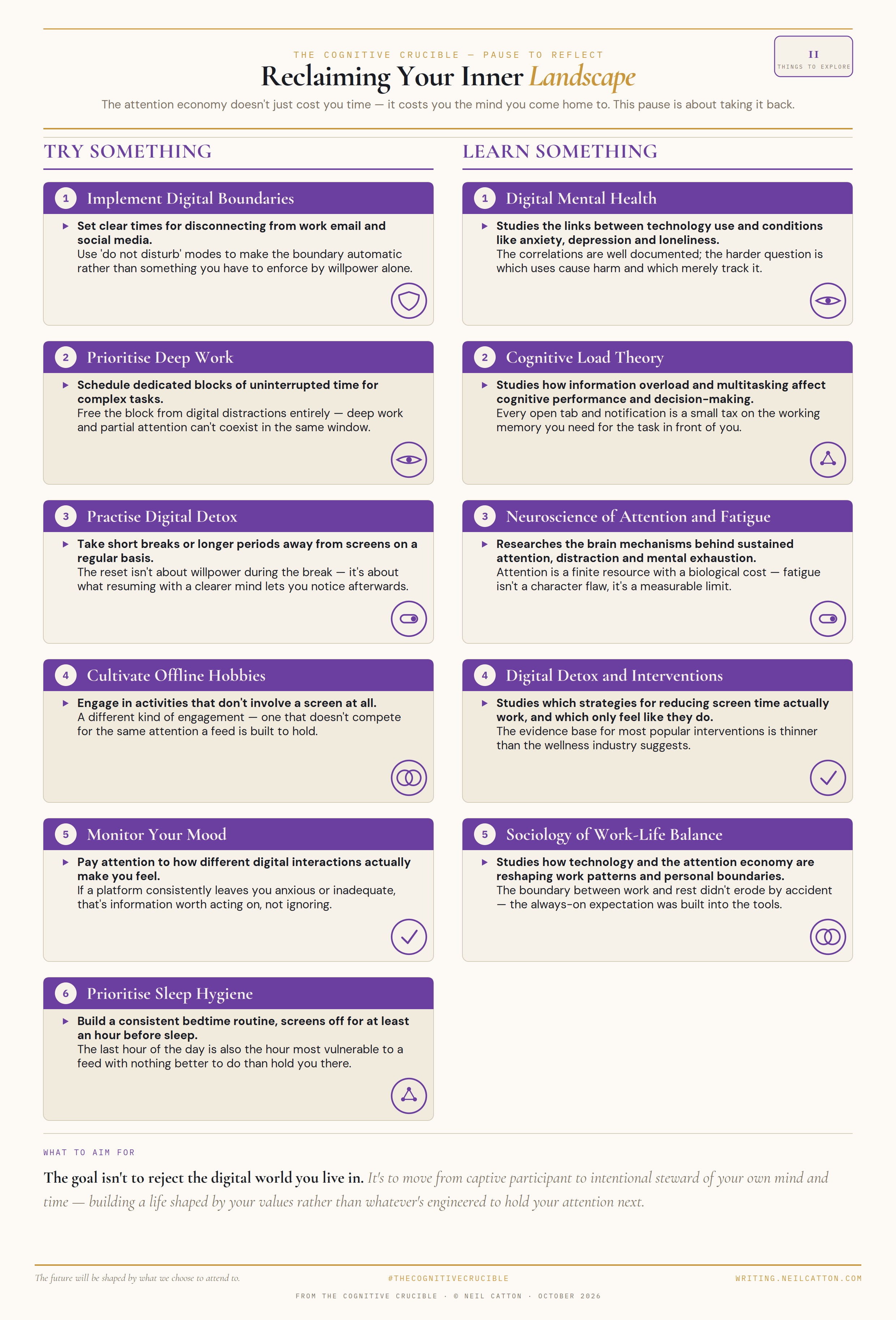
The card splits into two columns — six things to try, from digital boundaries to sleep hygiene, and five research threads for anyone who wants to go further, from cognitive load theory to the neuroscience of attention and fatigue. It’s for anyone who’s noticed the fog and wants a way back out of it.
It comes from The Cognitive Crucible, where the fuller argument about attention, technology and the mind lives. The card stands on its own — you don’t need the book to use it.
Print it, pin it somewhere you’ll see it before you next reach for your phone, or send it to someone who’s been meaning to make this change.
What would you actually notice, if you paid attention to how a day online makes you feel?
You’re reading The Next Evolution by Neil Catton, articles that explore the human world and the intersection of technology, they try and ask difficult questions - not to scare - but to inform. If someone forwarded this to you, you can subscribe free at neilcatton.substack.com.
Neil Catton is the author of The Next Evolution, The Cognitive Crucible and The Shadow System - available on Amazon, and writes at the intersection of technology, ethics, and human purpose.