

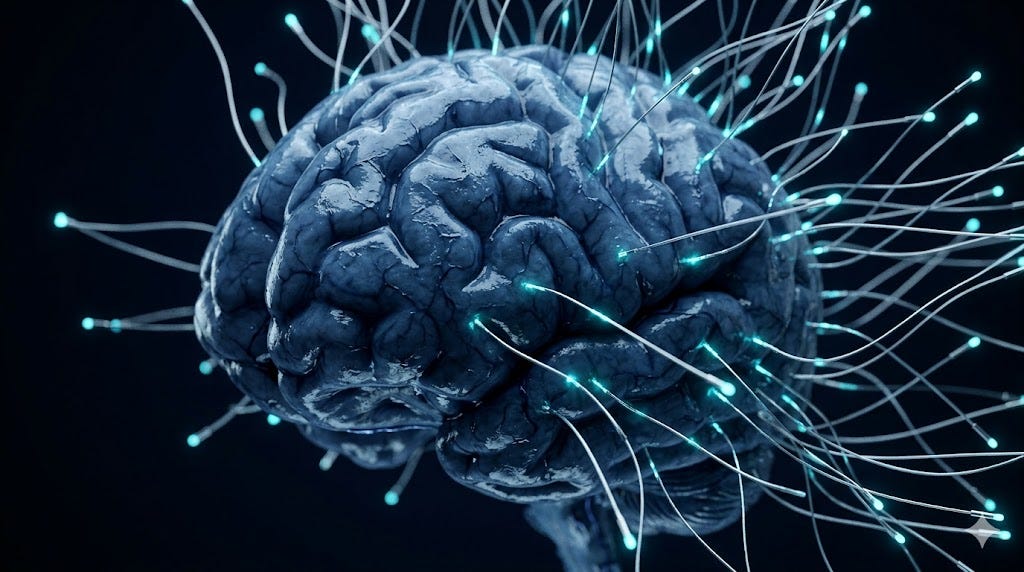
For decades, brain-computer interfaces existed only in science fiction and the most extreme experimental settings. That is no longer true. Clinical trials are expanding, rival companies are racing to scale, and questions about what happens when machines learn to read your mind are suddenly urgent.
What Is a Brain-Computer Interface?
A brain-computer interface — BCI — is exactly what it sounds like: a device that creates a direct communication channel between the brain and an external machine. Some sit on the scalp and read electrical patterns non-invasively. Others require surgery, threading electrodes into the brain itself to capture the precise firing of individual neurons.
The gap between those two approaches matters enormously. Non-invasive devices are safer and easier to deploy but pick up only blurry, averaged signals. Implanted electrodes record with far greater fidelity, enough to decode intended speech, planned movement, even emotional states, but they carry the risks of any neurosurgical procedure.
For most of the past thirty years, BCIs were research instruments. Dozens of patients worldwide had received implants, mostly in academic studies with no path to a commercial product. That is changing quickly.
Neuralink, Synchron, and the Race to Scale
The name most people know is Neuralink, Elon Musk’s neurotechnology company. In early 2024, Neuralink implanted its first human patient a 29-year-old named Noland Arbaugh, paralysed from the shoulders down after a diving accident. Within weeks he was using the device to control a computer cursor and play chess online, simply by thinking about moving his hand.
The technical achievement was real. But Neuralink was not first.
Synchron, an Australian-American company, had already completed the first human implant of its Stentrode device in the United States in 2021. Rather than drilling through the skull, Synchron threads its electrode array through the jugular vein and into a blood vessel adjacent to the motor cortex, a minimally invasive approach that trades some signal quality for substantially lower surgical risk.
By early 2026, Synchron had implanted its device in more than a dozen patients across the US and Australia. Neuralink had expanded its trial to several more participants. Both companies are chasing the same initial target: restoring communication and control for people with paralysis, ALS, or locked-in syndrome.
The difference in approach reflects a deeper question: do you optimise for the best possible signal, or for the broadest possible access? Neuralink’s implant records thousands of neurons simultaneously. Synchron’s records far fewer. But Synchron’s procedure can be done by an interventional radiologist, not a neurosurgeon which matters enormously if you want to treat thousands of patients, not dozens.
China’s BCI Surge
Away from the headlines dominated by US companies, China has built one of the world’s most active BCI research and commercialisation ecosystems in a remarkably short period.
BrainCo, founded by a Harvard researcher and now headquartered in China, has sold non-invasive headbands measuring attention and focus to schools across Asia. The company claims millions of devices deployed. Whether attention-monitoring headbands worn by schoolchildren represent a genuine BCI application or a surveillance product dressed in neurotechnology language, is one of the more contested questions in the field.
On the implanted side, Chinese research teams have published results from their own cortical electrode trials. The government has identified BCI as a strategic technology. Funding is substantial. The competitive dynamic between Chinese and US approaches is accelerating progress in ways that benefit patients and raising geopolitical questions about who controls the infrastructure for reading human brains.
Beyond Paralysis: The Expanding Application Map
The initial clinical case for BCIs is straightforward: restore lost function. Give a paralysed person the ability to communicate. Let someone with ALS operate a computer. These applications are compelling on their own terms and provide the regulatory pathway to get devices approved.
But the companies and researchers involved are not limiting their ambitions to restoration.
Synchron has begun exploring BCIs for treatment-resistant depression. The same electrodes that record motor intent can, in principle, deliver targeted stimulation to modulate mood. This is not speculation, deep brain stimulation, which uses implanted electrodes to treat Parkinson’s disease and severe depression, has been practiced for two decades. What is new is the possibility of closed-loop systems: devices that continuously read brain state and adjust stimulation in real time, rather than delivering a fixed electrical pattern.
Further out, there is serious research into cognitive augmentation using BCIs not to restore lost capability but to extend what a healthy brain can do. Memory prosthetics are in early trials. Enhanced attention and focus are commercial targets for non-invasive devices today.
Each step along this path moves BCIs further from unambiguous medical benefit and closer to territory where the ethical questions become harder.
The Questions Nobody Has Answered Yet
Brain data is among the most intimate data that exists. It can reveal not just what you intended to do but what you thought, what you felt, what you were about to say before you stopped yourself. When that data is captured by a device made by a private company, transmitted to servers, and analysed by algorithms, the privacy implications are profound.
Most existing data protection frameworks were not designed with neural data in mind. A small number of jurisdictions — Colorado and Minnesota in the US, Chile at the national level — have begun passing laws that specifically address neurotechnology and cognitive liberty. Most countries have not.
There is also the question of long-term device performance. Electrodes implanted in brain tissue degrade. The immune response to foreign materials causes neural scar tissue to form around electrode tips, reducing signal quality over time. Neuralink’s own trial revealed that some electrode threads had retracted from the cortex, limiting the device’s performance months after implant. This is a known, unsolved engineering problem.
And then there is the question of what happens when a company goes out of business. The device inside your head has software, firmware, connectivity. Who maintains it? What happens when the company that made it no longer exists? These are not hypothetical concerns.
Why This Moment Is Different
BCIs have been “about to transform medicine” for at least fifteen years. What makes the current moment genuinely different is the convergence of several things at once.
First, the engineering has improved enough to produce results that patients notice. Noland Arbaugh described the Neuralink device as giving him back independence he thought was gone permanently. That is not a marginal improvement.
Second, the regulatory pathway has clarified. The FDA has granted Breakthrough Device Designation to multiple BCI products. The agency has published guidance on what evidence it expects. The path to approval, while still long, is now navigable.
Third, the competitive field has expanded. When only academic labs were working on BCIs, progress was slow. Now there are well-funded companies with engineering talent and commercial pressure to solve the remaining problems. That changes the pace.
The question is no longer whether BCIs will become a real medical technology. They already are. The questions now are how quickly they will spread, how broadly they will be applied, and whether the institutions governing them can keep pace with what the technology makes possible.
KEY FACTS AT A GLANCE
• Neuralink implanted its first human patient in January 2024; Synchron completed the first US human implant in 2021
• Synchron’s Stentrode is delivered via blood vessel no open-brain surgery required
• China’s BrainCo claims millions of non-invasive BCI headbands deployed in schools
• Colorado, Minnesota, and Chile have passed early laws specifically protecting neural data
• Electrode degradation over time remains the field’s central unsolved engineering challenge
• BCI applications in active research: paralysis, ALS, treatment-resistant depression, memory prosthetics
You’re reading The Next Evolution by Neil Catton, articles that explore the human world and the intersection of technology, they try and ask difficult questions - not to scare - but to inform. This is part of the Emerging Science & Technology series.
If someone forwarded this to you, you can subscribe free at neilcatton.substack.com.
Neil Catton is the author of The Next Evolution, The Cognitive Crucible and The Shadow System - available on Amazon, and writes at the intersection of technology, ethics, and human purpose.