

You didn’t negotiate the terms. You clicked accept, the way everyone does, and moved on to whatever you’d actually opened the app to do. Somewhere in that gap between clicking and using is the entire business model.
If a platform is free, you’re not the customer — your attention and your data are the product being sold, and the transaction happens whether or not you ever stop to notice it. Recognising the exchange is the first thing that changes about how you use it.
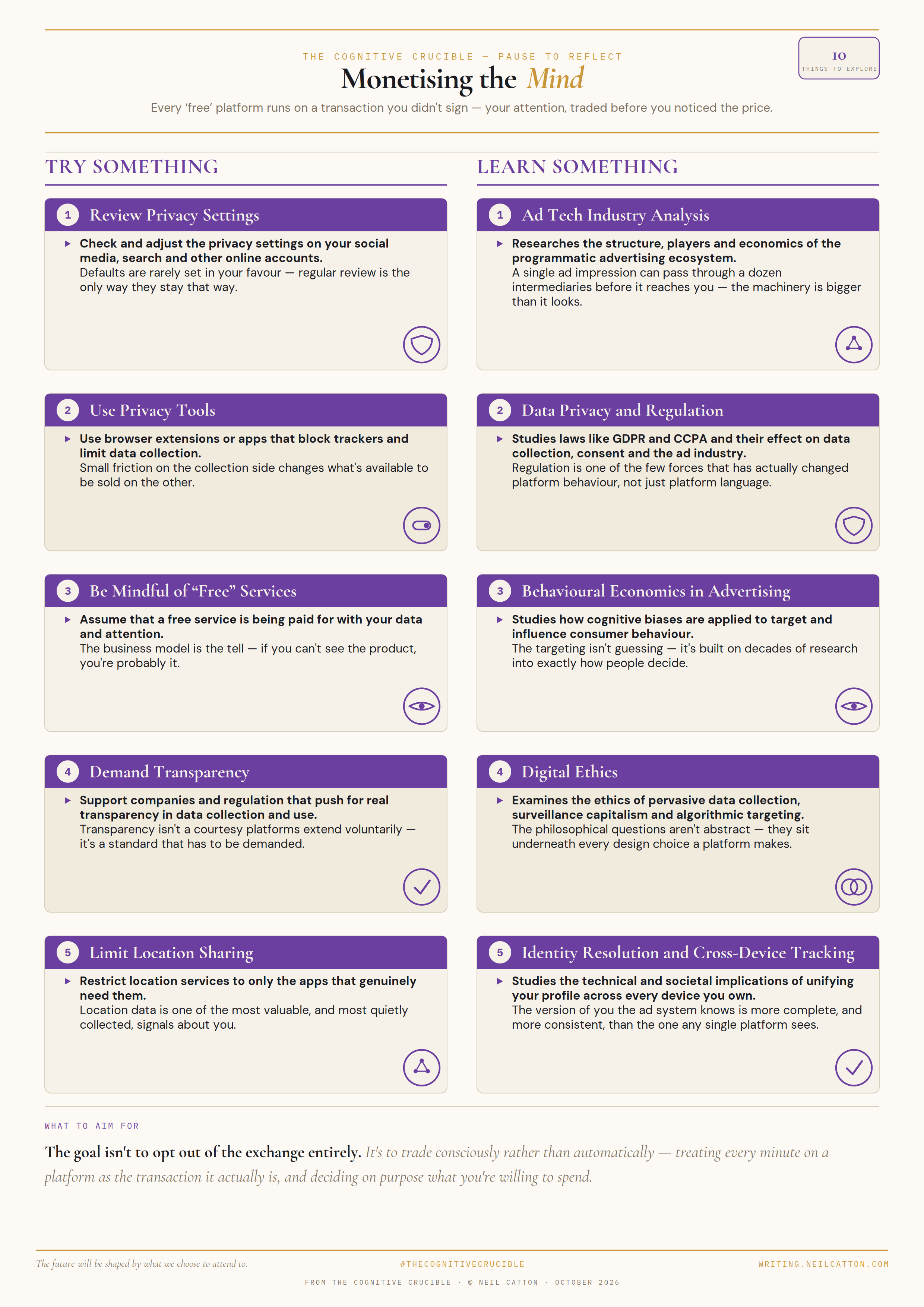
The card splits into two columns — five things to try, from reviewing your privacy settings to limiting location sharing, and five research threads for anyone who wants to understand the machinery behind it, from the ad tech ecosystem to identity resolution across your devices. It’s for anyone ready to stop being an unconscious product.
It comes from The Cognitive Crucible, where the fuller argument about attention, technology and the mind lives. The card stands on its own — you don’t need the book to use it.
Print it, pin it somewhere you’ll see it, or send it to whoever still says they’ve got “nothing to hide.”
If every minute online is a transaction, what have you actually been spending it on?
You’re reading The Next Evolution by Neil Catton, articles that explore the human world and the intersection of technology, they try and ask difficult questions - not to scare - but to inform. If someone forwarded this to you, you can subscribe free at neilcatton.substack.com.
Neil Catton is the author of The Next Evolution, The Cognitive Crucible and The Shadow System - available on Amazon, and writes at the intersection of technology, ethics, and human purpose.