

Alex has four different names for four different rooms — one on LinkedIn, one on a gaming server, one under an old university nickname nobody uses any more, and one that’s just a photo and a bio nobody wrote carefully. None of them are lies, exactly. Each one just answers to a different audience, a different algorithm, a different version of what seemed safe to say at the time.
Coherence isn’t the same as sameness. But somewhere between the tenth platform and the thirtieth persona, most people stop choosing who they are online and start absorbing whatever each network defaults to. The platforms didn’t ask for permission to shape that. Nobody had to grant it — the shaping just happened, one default setting and one algorithmic nudge at a time, until the version of Alex that shows up somewhere wasn’t really a decision at all.
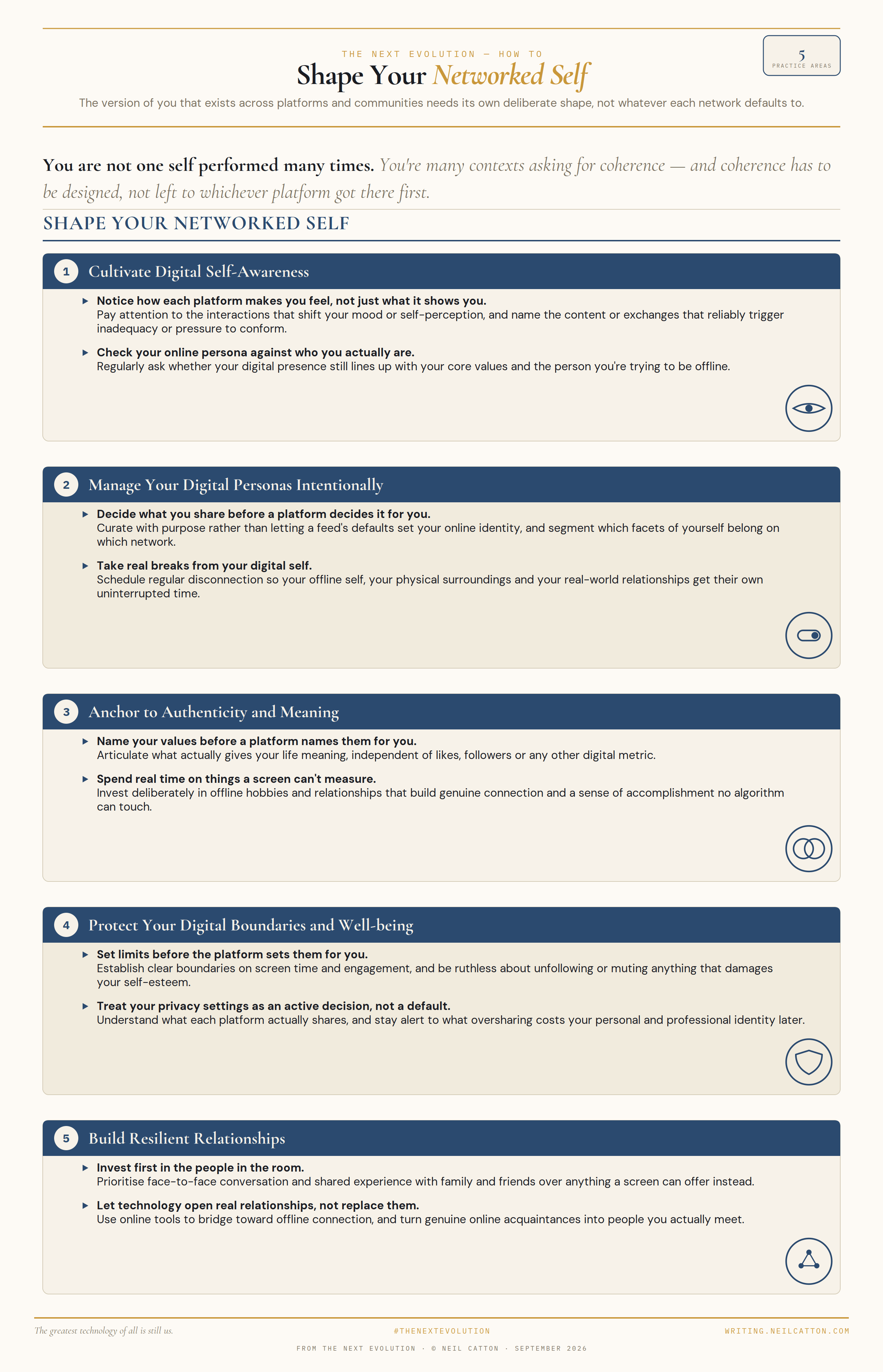
The card sets out five practice areas, from noticing what a platform’s mood-shifts are actually telling you to rebuilding the real-world relationships technology was only ever meant to support. It’s written for anyone who’s stopped noticing how many versions of themselves they’re currently running.
It comes from The Next Evolution, where the fuller argument about identity, technology and coherence gets made at length. The card doesn’t need the book to make sense — it stands on its own.
Print it, or send it to whoever’s about to open their fifth tab of the day without noticing they did.
If nobody built your online self on purpose, who actually did?
You’re reading The Next Evolution by Neil Catton, articles that explore the human world and the intersection of technology, they try and ask difficult questions - not to scare - but to inform. If someone forwarded this to you, you can subscribe free at neilcatton.substack.com.
Neil Catton is the author of The Next Evolution, The Cognitive Crucible and The Shadow System - available on Amazon, and writes at the intersection of technology, ethics, and human purpose.