

Two people watch the same event unfold and walk away with two different accounts of what it meant. Neither is lying. Each one was fed a slightly different set of stories in the weeks before, by different feeds, different creators, different algorithms quietly deciding which version deserved the traffic.
The stories that get amplified aren’t automatically the ones that are true. They’re the ones that were built, by design or by accident, to travel — and travel has its own logic, closer to what spreads than to what’s accurate. Nobody sets out to believe the version built to move fastest. It just arrives first, and arriving first counts for more than it should.
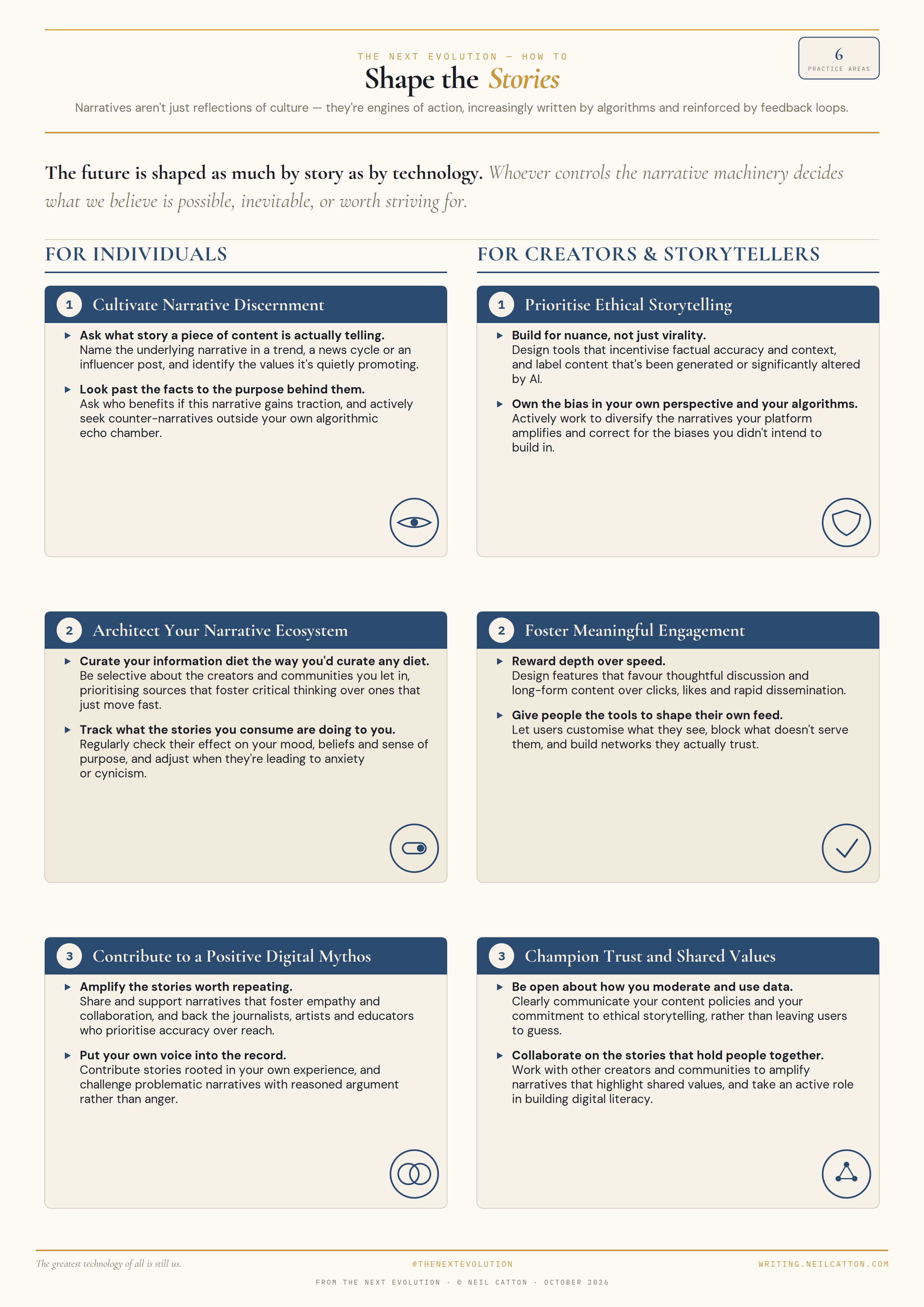
The card splits into two columns — three practices for anyone trying to read narrative with more discernment, and three for the creators and platforms actually building the stories that circulate. It’s for whoever’s ready to stop absorbing a narrative and start asking who built it.
It comes from The Next Evolution, where the fuller argument about narrative, technology and collective meaning gets made at length. The card stands on its own — you don’t need the book to use it.
Print it, or send it to whoever just shared something you’re fairly sure they didn’t check first.
If the story got you here, who actually wrote it?
You’re reading The Next Evolution by Neil Catton, articles that explore the human world and the intersection of technology, they try and ask difficult questions - not to scare - but to inform. If someone forwarded this to you, you can subscribe free at neilcatton.substack.com.
Neil Catton is the author of The Next Evolution, The Cognitive Crucible and The Shadow System - available on Amazon, and writes at the intersection of technology, ethics, and human purpose.